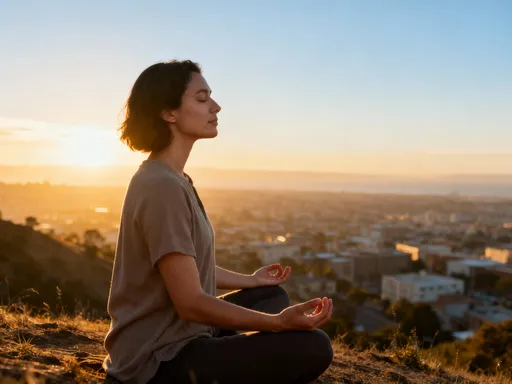
Breathe Like You Mean It: How I Found Calm in the Chaos
You’ve probably heard that breathing helps with stress—but what if you’ve been doing it all wrong? I definitely was. For years, I felt constantly on edge, until I actually *paid attention* to how I breathed. Turns out, simple, intentional breath work isn’t just hype. It’s a game-changer for mental clarity, energy, and emotional balance. This isn’t about magic—it’s about mechanics. Let me walk you through the real, science-backed breathing methods that quietly transformed my daily life.
The Hidden Crisis: Why Most of Us Can’t Breathe Right
In a world that never stops moving, our breath has become shallow, fast, and often unconscious. What should be one of the most natural acts—breathing—has quietly turned into a dysfunctional habit for millions. Modern life, with its constant demands, screen time, and sedentary routines, encourages chest breathing rather than deep, diaphragmatic breaths. Many people spend their days breathing rapidly through the mouth, especially when stressed, without realizing how this impacts their health. This pattern, known as overbreathing or hyperventilation, reduces carbon dioxide levels in the blood, which in turn limits oxygen delivery to the brain and tissues. It may seem counterintuitive, but breathing too much can actually starve your body of oxygen.
Respiratory physiology teaches us that optimal breathing is slow, low, and rhythmic—originating from the diaphragm, not the upper chest. When you breathe using your diaphragm, the belly expands on the inhale and gently draws in on the exhale. This movement massages internal organs, supports healthy digestion, and promotes efficient gas exchange in the lungs. In contrast, chronic chest breathing activates the sympathetic nervous system, the same system responsible for the “fight-or-flight” response. Over time, this keeps the body in a state of low-grade stress, contributing to anxiety, poor sleep, fatigue, and difficulty concentrating. The problem isn’t that people aren’t breathing—it’s that they’re breathing inefficiently.
One of the most misunderstood aspects of breathing is the role of carbon dioxide. Many believe that taking rapid breaths increases oxygen in the body, but the reality is more complex. Carbon dioxide is not just a waste product—it plays a critical role in releasing oxygen from hemoglobin into the cells, a process known as the Bohr effect. When you breathe too quickly, you expel too much CO₂, making it harder for oxygen to be delivered where it’s needed most. This can lead to symptoms like dizziness, brain fog, and even panic attacks. Recognizing this imbalance is the first step toward reclaiming control over your breath. Breathing well isn’t about inhaling more air—it’s about using what you already have more effectively.
Reframing breathing as a skill rather than a reflex is essential. Just like posture or hydration, it’s something that can be improved with awareness and practice. Poor breathing patterns often develop over years of stress, poor posture, or illness, and they become so automatic that most people don’t notice them until symptoms arise. The good news is that unlike many health challenges, breath training is free, immediate, and always accessible. By simply tuning in, you can begin to correct dysfunctional habits and restore balance to your nervous system. The journey starts with noticing—how does your breath feel right now? Is it shallow or deep? Fast or slow? Answering these questions honestly opens the door to change.
Why Breathing Rewires Your Brain (And Why It Matters)
Breathing is far more than a function of the lungs—it’s a direct communication line between the body and the brain. Each breath sends signals through the vagus nerve, a key component of the parasympathetic nervous system, which governs rest, digestion, and recovery. When you slow and deepen your breath, you stimulate the vagus nerve, triggering what’s known as the relaxation response. This lowers heart rate, reduces blood pressure, and quiets mental chatter. In contrast, rapid, shallow breathing signals danger to the brain, keeping the body in a state of alertness. The beauty of breath work lies in its ability to override this automatic response, giving you a powerful tool to influence your mental and emotional state.
Scientific studies have consistently shown that controlled breathing practices can alter brainwave activity. For example, slow breathing at around six breaths per minute has been linked to increased alpha and theta brainwaves, which are associated with calm focus and meditative states. This rhythm also improves heart rate variability (HRV), a marker of resilience and nervous system flexibility. Higher HRV is linked to better emotional regulation, reduced anxiety, and improved cognitive performance. In one study published in *Frontiers in Psychology*, participants who practiced coherent breathing for just 20 minutes a day over eight weeks reported significant reductions in perceived stress and cortisol levels. These changes weren’t temporary—they reflected lasting shifts in how the brain and body responded to pressure.
The implications for daily life are profound. Imagine facing a difficult conversation, a tight deadline, or a moment of overwhelm with a calmer mind and steadier heart. Breath work doesn’t eliminate stress, but it changes your relationship to it. Over time, regular practice strengthens the brain’s ability to return to balance after disruption. This builds emotional resilience—the capacity to face challenges without spiraling into anxiety or fatigue. It’s not about becoming emotionless, but about creating space between stimulus and response. That space is where choice lives, and breath is the bridge to accessing it.
What makes breath so powerful is its immediacy. Unlike medications or long-term therapies, you don’t need to wait for results. Within minutes, intentional breathing can shift your physiology. This accessibility makes it especially valuable for women managing busy households, caregiving responsibilities, or professional demands. A few conscious breaths before responding to a child’s tantrum, during a tense phone call, or while waiting in traffic can prevent emotional escalation. The brain doesn’t distinguish between real and perceived threats—both trigger the same stress response. By using breath to signal safety, you teach your nervous system that not every challenge requires an emergency reaction. This subtle retraining leads to lasting improvements in mood, focus, and overall well-being.
The Foundation: Diaphragmatic Breathing, Demystified
Before exploring advanced techniques, it’s essential to master the foundation: diaphragmatic breathing. Also known as belly breathing, this method engages the diaphragm—a dome-shaped muscle beneath the lungs—allowing for fuller, more efficient breaths. When done correctly, the abdomen rises on the inhale and falls on the exhale, while the chest remains relatively still. This contrasts with shallow chest breathing, where the shoulders and upper chest lift with each breath, a pattern often linked to stress and fatigue. Diaphragmatic breathing increases lung capacity, improves oxygen exchange, and supports cardiovascular health. More importantly, it activates the body’s natural relaxation response, making it the cornerstone of all effective breath work.
To practice diaphragmatic breathing, begin by lying on your back with knees bent or sitting in a comfortable chair with feet flat on the floor. Place one hand on your chest and the other on your belly, just below the ribcage. Inhale slowly through your nose, allowing the breath to fill your lower abdomen like a balloon expanding. The hand on your belly should rise, while the one on your chest should move very little. Exhale gently through the nose or mouth, letting the belly fall naturally. Aim for a smooth, continuous rhythm—no holding, no forcing. Start with five to ten minutes a day, gradually increasing as it becomes more natural. The goal is not perfection, but consistency and awareness.
Common mistakes include breathing too quickly, lifting the shoulders, or tensing the abdomen. Some people mistakenly believe they need to push their belly out forcefully, but this creates tension rather than relaxation. Instead, focus on allowing the breath to flow effortlessly. Visual cues can help—imagine your breath moving like waves, rising and falling with ease. Another helpful image is filling a balloon in your lower belly, expanding outward in all directions. Practicing in different positions—lying down, sitting, or even standing—helps integrate the technique into daily life. Over time, this method should become your default way of breathing, not just something you do during practice sessions.
Building muscle memory takes time, but the benefits are worth the effort. As diaphragmatic breathing becomes habitual, you may notice improved energy levels, reduced tension in the neck and shoulders, and a greater sense of calm. It also supports better sleep, as the body learns to relax more deeply. For women navigating the physical and emotional shifts of midlife, this practice offers a grounding presence. It requires no special equipment, no extra time, and no cost—just a willingness to pay attention. Once mastered, it serves as the foundation for more advanced techniques, making them more effective and easier to learn. The journey to better breathing begins with a single, conscious breath.
Box Breathing: The Navy SEAL Secret for Instant Focus
Used by elite military personnel, athletes, and high-performing professionals, box breathing is a powerful technique for regaining focus and composure under pressure. Also known as square breathing, it follows a simple 4-4-4-4 pattern: inhale for four counts, hold for four, exhale for four, and hold again for four. This structured rhythm creates a sense of mental clarity and physiological stability, making it ideal for moments of stress, distraction, or decision-making. Unlike spontaneous breathing, which can be erratic under pressure, box breathing provides a predictable, calming structure that the nervous system can rely on. Its origins in high-stakes environments speak to its effectiveness—when focus is critical, this method helps maintain control.
The science behind box breathing lies in its impact on heart rate variability (HRV) and the autonomic nervous system. The breath holds, in particular, enhance vagal tone—the strength of the vagus nerve’s influence on the heart. A stronger vagal tone is associated with better emotional regulation, reduced inflammation, and improved resilience. By extending both the inhale and exhale phases and adding pauses, box breathing slows the respiratory rate and synchronizes breathing with heart rhythms. This synchronization, known as respiratory sinus arrhythmia, promotes a state of calm alertness. Studies have shown that regular practice of paced breathing techniques like box breathing can lead to measurable improvements in attention, memory, and stress tolerance.
Practicing box breathing is simple, but timing matters. Start by finding a quiet space and sitting upright with feet on the floor. Inhale slowly through the nose for a count of four, keeping the breath smooth and steady. At the top of the inhale, pause for four counts without tension. Then, exhale fully through the nose for four counts, allowing the body to release. After the exhale, pause again for four counts before beginning the next inhale. If four counts feels too long, adjust to a comfortable pace—three or five counts can work just as well. The key is consistency in the rhythm, not the exact number. Practice for three to five minutes at a time, especially before high-pressure situations like meetings, difficult conversations, or public speaking.
Real-world applications make this technique especially valuable. A mother can use it before responding to a child’s outburst, a professional before giving feedback, or anyone before making an important decision. It can also be used at night to quiet a racing mind and prepare for sleep. Over time, the body begins to associate this pattern with safety and control, making it easier to access during moments of crisis. The beauty of box breathing is that it requires no special training—just awareness and repetition. With regular use, it becomes a reliable tool for maintaining mental clarity and emotional balance, even in the midst of chaos.
The 4-7-8 Method: A Natural Reset for Anxiety and Sleep
Developed by Dr. Andrew Weil, a respected physician and integrative medicine expert, the 4-7-8 breathing technique is designed to calm the nervous system and promote relaxation. The method follows a specific count: inhale quietly through the nose for four seconds, hold the breath for seven seconds, and exhale completely through the mouth for eight seconds, making a soft “whoosh” sound. This extended exhalation is the key—by making the out-breath longer than the in-breath, the technique strongly activates the parasympathetic nervous system, signaling the body to shift into rest-and-digest mode. It’s particularly effective for reducing anxiety, managing sudden stress spikes, and improving sleep onset.
Why does a longer exhale have such a powerful effect? The answer lies in the vagus nerve and the body’s natural reflexes. During exhalation, heart rate naturally slows—a phenomenon known as respiratory sinus arrhythmia. Extending the exhale amplifies this effect, deepening the relaxation response. The 4-7-8 method leverages this physiology to create an internal reset. Within a few cycles, many people report a noticeable decrease in heart rate, muscle tension, and mental chatter. For women dealing with nighttime rumination or difficulty falling asleep, this technique can be a gentle, non-pharmacological alternative to sleep aids. It doesn’t work like a sedative—it simply guides the body back to its natural state of balance.
To practice the 4-7-8 method, sit or lie in a comfortable position with the spine straight. Place the tip of your tongue against the ridge behind your upper front teeth—a position that facilitates nasal inhalation and oral exhalation. Begin by exhaling completely through the mouth, then inhale silently through the nose for four counts. Hold the breath for seven counts, keeping the body relaxed. Then, exhale slowly and completely through the mouth for eight counts, making a soft whooshing sound. This completes one cycle. Repeat for four full breaths initially, gradually increasing to eight cycles as comfort allows. It’s best practiced twice a day—once in the morning to set a calm tone, and once at night to support sleep.
Common pitfalls include forcing the breath, holding tension during the pause, or rushing through the counts. The goal is not to maximize air intake but to maintain a smooth, rhythmic flow. Some beginners find the seven-second hold challenging, and that’s okay—adjust the count to maintain comfort while preserving the ratio. The 4-7-8 method is not about perfection, but about consistency. Over time, regular use can help retrain the nervous system to default to calm rather than stress. It’s a simple, evidence-based tool that empowers individuals to take control of their emotional and physiological state—anytime, anywhere.
Integrating Breath Into Daily Life (Without Adding More to Your Plate)
Techniques are only effective if they become part of daily life. The challenge isn’t knowing *how* to breathe—it’s remembering *to* breathe. The good news is that breath work doesn’t require extra time, special equipment, or a quiet room. It can be seamlessly woven into existing routines. The key is habit stacking—pairing breath practice with activities you already do every day. For example, take three diaphragmatic breaths while waiting for the coffee to brew, practice box breathing while brushing your teeth, or use the 4-7-8 method as you lie in bed before sleep. These micro-moments of awareness add up, creating lasting change without adding to your to-do list.
Another effective strategy is using environmental cues as reminders. Every time you stop at a red light, take a slow breath in and out. When you open a door, pause for one conscious breath. After sending an email, close your eyes and reset with two cycles of deep breathing. These small rituals train your brain to return to the present moment. Over time, they reduce the accumulation of daily stress and prevent emotional burnout. For busy women juggling multiple roles, these brief pauses can be a form of self-care that doesn’t require sacrifice. They are not escapes from responsibility, but moments of recentering that enhance clarity and patience.
Tracking subtle benefits can also reinforce the habit. You may notice that you’re less reactive in arguments, fall asleep more easily, or feel more focused during tasks. These changes often happen gradually, so patience is essential. Journaling can help—simply noting how you feel before and after a breathing session increases awareness and motivation. There’s no need to practice for long periods; even one minute of intentional breathing can shift your state. The goal is not to achieve a perfect meditation, but to cultivate a gentle, ongoing relationship with your breath.
Flexibility is crucial. Some days, you may have time for a ten-minute session; other days, a single breath will be enough. The important thing is to show up, without judgment. Breath work is not another chore to master—it’s a gift to yourself. By making it effortless and accessible, it becomes sustainable. Over time, it transforms from a practice into a way of being. You begin to breathe not just to reduce stress, but to reconnect with yourself, to honor your body’s wisdom, and to move through life with greater ease.
When to Seek Help: Breathing Right Isn’t a Cure-All
While breath work offers powerful benefits for mental and physical health, it is not a substitute for professional medical care. For individuals with diagnosed conditions such as asthma, chronic obstructive pulmonary disease (COPD), anxiety disorders, or post-traumatic stress disorder (PTSD), breathing techniques should be used as a complementary tool, not a replacement for treatment. In some cases, certain practices—especially those involving breath holds—can be unsafe. People with cardiovascular conditions, low blood pressure, or a history of fainting should consult a healthcare provider before beginning any structured breath work program.
It’s also important to recognize when emotional distress goes beyond what self-help strategies can address. Persistent anxiety, depression, or trauma require support from qualified mental health professionals. Breath work can support therapy by improving emotional regulation, but it cannot resolve deep-seated psychological patterns on its own. The goal is integration, not isolation—using breath as one part of a holistic approach to well-being that may include counseling, medication, lifestyle changes, and social support.
Safety is paramount. If you feel lightheaded, dizzy, or anxious during breath practice, stop immediately and return to normal breathing. Never force the breath or push beyond comfort. Progress is personal, and there is no “right” pace for everyone. Some people may notice changes within days; for others, it takes weeks or months. What matters most is consistency and self-compassion. Celebrate small wins—like remembering to breathe before reacting, or noticing a moment of calm in a hectic day.
The journey of breath is not about perfection. It’s about presence. By learning to breathe with intention, you reclaim a fundamental aspect of your health—one that has been overlooked for too long. Small shifts in how you breathe can lead to profound changes in how you feel, think, and live. But always remember: you are not alone, and seeking help is a sign of strength, not weakness. With patience, care, and the right support, breath can become a lifelong companion on the path to greater peace and well-being.