How I Found Real Balance Through Qigong—No Gimmicks, Just Results
For years, I chased quick fixes—detoxes, intense workouts, miracle supplements. Nothing gave me lasting energy or calm. Then I tried qigong, quietly, skeptically. Within weeks, my sleep deepened, my focus sharpened, and my stress didn’t just fade—it transformed. This isn’t about magic. It’s about consistency, breath, and tuning into your body’s natural rhythm. If you’re overwhelmed and running on empty, this journey might be what you’ve unknowingly been searching for.
The Breaking Point: When Modern Life Overwhelmed My Health
Like many women in their thirties and beyond, I prided myself on being capable—managing a household, raising children, perhaps holding down a job or running a small business. I believed I was doing everything right: eating balanced meals, walking regularly, even attending fitness classes. Yet, no matter how disciplined my routine, I felt constantly drained. Mornings began with grogginess, not energy. Afternoons brought a fog that made concentration difficult. Evenings offered no relief—my mind raced with unfinished tasks, and sleep, when it came, was restless and incomplete.
The paradox was maddening. I wasn’t neglecting my health, yet I wasn’t thriving. Headaches became frequent, and small stresses—misplaced keys, a delayed appointment—triggered disproportionate frustration. I began to question whether wellness, as it was marketed, truly served women like me. The more I pushed—intermittent fasting, high-intensity interval training, caffeine-laced pre-workout drinks—the more my body seemed to resist. I wasn’t broken, but I wasn’t whole either. There had to be another way, one that didn’t demand more from an already overextended system.
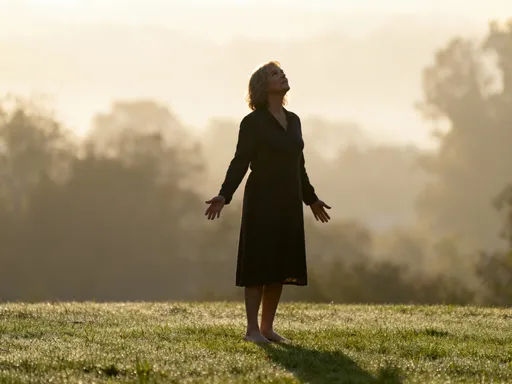
It was during a quiet conversation with an old friend, a nurse who worked in integrative care, that I first heard the word qigong. She didn’t present it as a cure-all or a trendy wellness hack. Instead, she described it as a practice she turned to when her shifts became overwhelming. “It doesn’t take much,” she said. “Ten minutes, standing barefoot on the grass, breathing with intention. It brings me back to center.” Her calm demeanor, even after 12-hour shifts, made me curious. Could something so simple really make a difference? I decided to find out—not with grand expectations, but with an open mind.
Discovering Qigong: More Than Just Movement
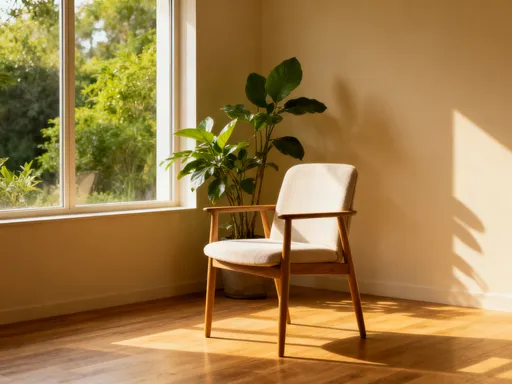
My first qigong session took place in a community wellness center, a modest room with soft lighting and floor-to-ceiling windows that let in morning light. The instructor, a woman in her sixties with steady hands and a gentle voice, began not with movement, but with stillness. “Stand like a tree,” she said. “Feel your feet rooted. Let your breath settle.” I remember feeling slightly awkward—was this really exercise? There were no repetitions, no sweat, no count. Just slow, flowing motions that mimicked nature: rising arms like branches reaching for the sun, hands gliding through invisible water, a gentle swaying as if moved by a breeze.
Qigong, I learned, is a mind-body practice with roots in traditional Chinese medicine, stretching back thousands of years. The word itself combines qi, meaning vital energy or life force, and gong, meaning skill or cultivation. Together, qigong means “cultivating energy.” Unlike high-impact workouts that deplete reserves, qigong replenishes them. It is not performance-based; there is no goal of speed, strength, or perfection. Instead, it emphasizes awareness, breath coordination, and gentle, repetitive motions designed to harmonize the body and mind.
One of the first misconceptions I had to let go of was equating qigong with yoga or Tai Chi. While all three practices share philosophical foundations and promote well-being, they differ in form and intent. Yoga often emphasizes flexibility and holding poses, while Tai Chi is a martial art with choreographed sequences. Qigong, by contrast, can be simpler and more accessible. Some forms involve standing still, others seated movement—ideal for those with limited mobility. It doesn’t require special clothing, equipment, or even a lot of space. A corner of your living room is enough. The only tools you need are your breath and your attention.
Why Qigong Works: The Science Behind the Stillness
At first, the benefits I felt seemed almost too subtle to be real. I slept more deeply. My shoulders, which used to carry tension like armor, began to relax. I noticed I wasn’t reaching for coffee as often. But as I continued, I wanted to understand: what was actually happening in my body? What made this quiet practice so effective?
Scientific research offers compelling answers. Studies have shown that slow, rhythmic movements combined with deep breathing activate the parasympathetic nervous system—the part of the autonomic nervous system responsible for rest, digestion, and recovery. When this system is engaged, heart rate slows, muscles relax, and stress hormones like cortisol decrease. In one clinical trial published in the Journal of Alternative and Complementary Medicine, participants who practiced qigong for eight weeks showed significant reductions in cortisol levels and improvements in heart rate variability—a key marker of resilience to stress.
Sleep quality also improved in multiple studies. Researchers found that older adults who practiced qigong regularly reported falling asleep faster and waking less during the night. These changes weren’t dramatic overnight, but they were consistent. The body, it seems, responds not to intensity, but to regularity and intention. The practice teaches the nervous system to shift out of constant “fight-or-flight” mode and into a state of calm alertness.
Then there’s the concept of qi. While Western science doesn’t measure “energy flow” in the same way traditional systems do, the metaphor holds practical value. Think of qi like the electrical current in a home. If the wiring is blocked or disrupted, lights flicker, appliances fail. Similarly, when the body’s energy pathways—known as meridians—are stagnant due to stress, inactivity, or emotional strain, physical and mental symptoms arise. Qigong’s gentle movements are designed to clear these pathways, restoring smooth flow. Whether you interpret this energetically or physiologically—as improved circulation, nervous system regulation, or muscular coordination—the outcome is the same: a body that functions more efficiently and a mind that feels more at ease.
My Daily Routine: Simple Practices That Made a Difference
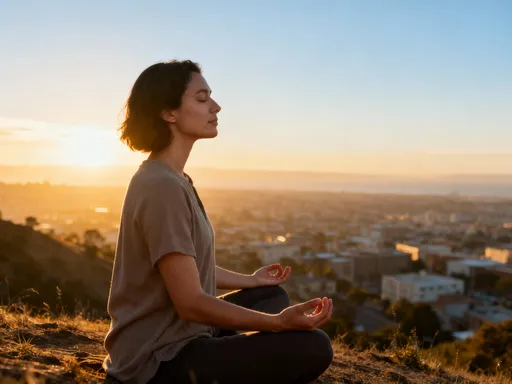
One of the reasons qigong has stayed in my life is its simplicity. I don’t need motivation. I don’t need a playlist or a gym. My routine takes just 10 to 15 minutes each morning, and I do it barefoot on a mat by the window. I begin with a few moments of stillness, feet shoulder-width apart, knees slightly bent, spine tall. I close my eyes and take three deep breaths, inhaling through the nose, exhaling slowly through the mouth. This signals to my body that it’s time to shift from sleep to mindful wakefulness.
The first movement is called Lifting the Sky. I raise my hands slowly in front of me, palms up, as if gathering energy from the earth. As they rise past my chest, I imagine lifting a heavy, luminous ball above my head. At the peak, I feel a gentle stretch through my arms and spine. Then, I lower my hands in front of my body, palms facing down, as if pressing the energy back into the ground. I repeat this five times, coordinating each motion with my breath—inhale as the hands rise, exhale as they fall. This simple act grounds me and awakens my circulation.
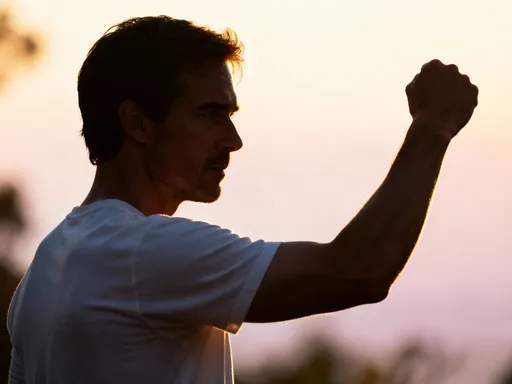
Next is Separating Heaven and Earth. One hand rises above my head, palm facing up, while the other lowers to my side, palm down. I feel a subtle pull along my torso, a gentle twist that releases tension in my midsection. I hold for a breath, then switch sides. This movement balances energy and improves posture, reminding me to stand tall throughout the day. Finally, I move into Swimming Dragon, a flowing side-to-side motion that loosens the hips and spine. I shift my weight gently from one foot to the other, arms gliding like water, torso rotating slightly. It feels like a wave moving through my body—calm, continuous, effortless.
I don’t always complete the full sequence. Some days, I only have five minutes. But I’ve learned that even a short practice counts. The key isn’t duration—it’s showing up. Over time, this consistency has built a foundation of calm that carries me through the busiest days. My children notice the difference. “You’re not rushing as much,” my daughter said recently. “You seem… lighter.” That lightness isn’t accidental. It’s cultivated, one breath at a time.
The Shift: Physical, Mental, and Emotional Changes Over Time
The changes didn’t happen overnight, but they were undeniable. After about six weeks of daily practice, I realized I hadn’t had a tension headache in weeks. My posture improved—no more slouching at the kitchen counter or hunching over my phone. My joints felt looser, especially in the mornings. I could bend to tie my shoes without stiffness. These physical shifts were welcome, but the mental and emotional changes were even more profound.
I began to notice that I wasn’t reacting as quickly to stress. When the internet went out during an important video call, I didn’t panic. I took a breath, stepped away for a moment, and returned with clarity. This new resilience wasn’t about suppressing emotions—it was about creating space between stimulus and response. Qigong had taught my nervous system to pause, to reset. I felt more patient with my family, more present during conversations, less caught in the mental loops that used to trap me.
Mental clarity returned in ways I hadn’t expected. Brain fog, which I had accepted as part of aging, lifted. I could follow recipes without losing track, remember names more easily, and focus on books or articles without distraction. This wasn’t due to supplements or brain games—it was the result of better sleep, reduced stress, and improved blood flow to the brain, all supported by regular qigong practice. My mind felt quieter, not because it was empty, but because it wasn’t cluttered with background noise.
Perhaps the most surprising change was emotional. I began to feel a deeper sense of connection—to my body, to the present moment, to the people around me. I wasn’t just going through the motions of motherhood or homemaking; I was experiencing them. Joy returned in small moments: the warmth of sunlight on my skin, the sound of rain, the laughter of my grandchildren. Qigong hadn’t erased life’s challenges, but it had given me the inner stability to meet them with grace.
Integrating Qigong Into Modern Life—Without the Hype
One of the things I appreciate most about qigong is that it doesn’t demand a lifestyle overhaul. It fits into real life. I’ve practiced during lunch breaks at work, standing quietly in a park. I’ve done seated qigong while waiting for a doctor’s appointment. Before bed, I use a simple breathing exercise—inhaling for four counts, holding for four, exhaling for six—to signal to my body that it’s time to rest. These micro-practices add up.
I’ve also learned to pair qigong with other healthy habits. After a short session, I drink a glass of water—hydration helps support the body’s energy flow. I’ve become more mindful of what I eat, not through restriction, but through awareness. When I’m calm, I make better choices. I crave nourishing foods, not sugary snacks. I walk more, not as exercise, but as movement that complements my practice. These habits don’t replace qigong; they enhance it, creating a holistic approach to well-being.
But I also want to be clear: qigong is not a trend to be consumed and discarded. It’s not about wearing special clothes or posting videos online. It’s a quiet, personal practice. The benefits come not from spectacle, but from stillness. Patience is essential. Some days, nothing feels different. That’s okay. Showing up matters more than feeling results. Presence—being fully in your body, breath by breath—is the real practice. Over time, this presence becomes a refuge, a place you can return to no matter what’s happening around you.
A Practice for Everyone: Who Should Try It (and Who Should Ask a Doctor First)
One of the most beautiful aspects of qigong is its accessibility. It can be adapted for people of all ages and fitness levels. I’ve seen women in their eighties practice seated forms with ease. Pregnant women use gentle qigong to stay centered. Even those recovering from surgery or managing chronic pain find relief through modified movements. Because it’s low-impact and self-paced, it’s one of the safest ways to begin a mind-body practice.
In fact, qigong is increasingly used in clinical settings. Hospitals and rehabilitation centers have incorporated it into programs for patients with heart disease, fibromyalgia, and cancer recovery. Research supports its role in reducing fatigue, improving balance, and enhancing quality of life. Unlike intense workouts that can strain an already compromised system, qigong supports healing by promoting circulation, reducing inflammation, and calming the nervous system.
That said, if you have a serious health condition—such as severe osteoporosis, uncontrolled hypertension, or a recent injury—it’s important to consult your healthcare provider before beginning any new practice. Qigong is a powerful complement to medical care, but it is not a substitute. It works best when integrated into a comprehensive approach that includes professional guidance, proper nutrition, and regular check-ups. For most women, however, especially those navigating the stresses of midlife, caregiving, or hormonal changes, qigong offers a gentle, sustainable path to better health.
True wellness isn’t about extremes. It’s not about punishing workouts, restrictive diets, or chasing the next miracle solution. It’s about alignment—between body, mind, and breath. Qigong isn’t a shortcut. It’s a lifelong conversation with your body, a daily act of listening and responding with kindness. By showing up gently, every day, we reclaim balance not through force, but through flow. And in that flow, we find not just health, but peace.