From Overwhelmed to Meaningful: How Simple Tech Habits Revived Our Family Memories
You know that feeling when you open your phone to find hundreds of blurry, unsorted photos—moments of your child’s first steps, holidays, birthdays—lost in a digital mess? You’re not alone. We’ve all been chasing the idea that more photos, more updates, more records mean better memories. But what if constantly documenting life is actually making us feel more disconnected? I used to think I had to capture everything. Then one day, I realized I hadn’t watched a single video from last summer’s trip. The camera rolled, but I wasn’t really there. That’s when I knew something had to change. It wasn’t the tech that failed me—it was how I was using it.
The Myth of Constant Capture: Why More Isn’t Better
Remember that birthday party where your child was blowing out candles, and half the room was holding up phones? I was one of them. I filmed the whole thing—14 takes, at least—trying to get the perfect clip. But when I finally looked up, the moment was gone. The laughter had faded, the candles were out, and I’d missed it all. That’s the trap so many of us fall into: we believe that if we don’t record it, it didn’t happen. But the truth is, the more we focus on capturing every second, the less we actually experience it.
Psychologists call this ‘continuous partial attention’—a state where we’re physically present but mentally distracted, always half-focused on the screen. We think we’re preserving memories, but we’re actually creating a buffer between ourselves and real connection. Think about it: when was the last time you watched a full home video from five years ago? Or scrolled through an entire album without skipping? Most of us don’t. We collect digital moments like souvenirs we never unpack. And over time, that habit doesn’t strengthen our memories—it weakens them. The brain remembers emotions, not pixels. It recalls how a hug felt, not how the lighting looked in a photo. When we prioritize the image over the experience, we trade depth for data.
I started noticing this with my daughter. She’d do something sweet—sing a silly song, draw me a picture—and my first instinct was to grab my phone. But she’d look at me and say, ‘Mommy, are you watching me?’ That hit me hard. She didn’t want an audience. She wanted my attention. That’s when I realized: the best memory isn’t the one I save—it’s the one I’m fully in. Tech was supposed to help me remember, but instead, it was teaching me how to look without seeing.
When Memory-Keeping Becomes a Chore
At first, I had such good intentions. I’d download those fancy photo organizing apps, promise myself I’d create beautiful digital albums, write little captions, maybe even make a yearly video montage. But life got busy. The laundry piled up, school projects needed signing, and suddenly it was December again. My photos were still scattered across three devices, untagged, unnamed, forgotten. What started as a loving gesture turned into guilt. I’d open my gallery and feel overwhelmed, like I’d failed at something important.
And I’m not alone. So many women I talk to feel the same way—mothers, aunts, sisters—who want to preserve family moments but end up drowning in digital clutter. They download apps that promise magic organization, only to find they’re too complicated to use consistently. Or they start strong in January and give up by March. Why? Because most systems aren’t designed for real life. They assume you have time, energy, and tech confidence you just don’t have after a long day of cooking, cleaning, and caring for others.
The problem isn’t laziness—it’s mismatched expectations. We’re told to ‘backup everything,’ ‘tag every person,’ ‘sort by date and location,’ but no one shows us how to do it in five minutes while the kids are napping. When memory-keeping feels like homework, it stops being joyful. It becomes another item on the to-do list we never check off. And the more we delay, the heavier the guilt grows. We think, ‘I should’ve saved that moment.’ But the truth is, we didn’t fail. The system failed us. We needed something simple, intuitive, and kind—not another complicated tool that demands perfection.
The Emotional Cost of Forgotten Files
Let’s talk about what really happens to all those unsorted photos and voice notes. They don’t just sit in the cloud—they disappear emotionally. I once asked my mom to show me a video of my first day of school. She said, ‘I think I filmed it… somewhere.’ We spent an hour searching through old devices, but we never found it. That moment—my little backpack, my nervous smile—is probably still on a forgotten SD card, buried under years of random screenshots and downloaded memes. And that’s not just a lost file. That’s a lost piece of our story.
Think about the grandparents who’ve never seen their grandchild’s first words because the video is buried in a phone that keeps crashing. Or the siblings who grow up never knowing how their parents met because no one ever shared those old stories. These aren’t small losses. They’re quiet heartbreaks—moments of connection that could’ve been passed down but weren’t. And the worst part? We don’t even realize it’s happening until it’s too late.
Data without access is invisible. A photo you can’t find might as well not exist. And when we rely on complex systems or vague intentions, we set ourselves up for exactly that. I’ve met women who’ve lost years of family history because a hard drive failed, or a cloud subscription lapsed. They didn’t mean to let it go. They just didn’t have a simple, reliable way to protect it. The emotional cost isn’t just guilt—it’s distance. It’s feeling disconnected from your own past, from your children’s childhoods, from the people who matter most. We save these files thinking we’re preserving love, but if they’re never seen or heard, are they really being loved back?
Shifting from Quantity to Presence
So what’s the alternative? It’s not to stop using tech altogether. That’s not realistic—or even necessary. The shift isn’t about doing less. It’s about doing differently. It’s about moving from ‘capturing to collect’ to ‘recording to feel.’ I started asking myself one simple question before I pulled out my phone: ‘Am I doing this for me, or for the memory?’ If the answer was ‘for the algorithm’ or ‘for social media,’ I’d put it away. If it was ‘because this moment matters to us,’ I’d press record—but only for a few seconds.
Now, instead of filming every soccer game, I record one clip: my son’s big smile when he scores. Instead of taking ten photos of birthday cake, I take one—and then I sit down and eat with my family. The difference? I’m present. And when I watch that short clip later, it’s not clutter. It’s a key that unlocks a full memory—the smell of candles, the sound of singing, the warmth of little hands holding mine. That’s what I want to remember. Not the image, but the feeling behind it.
This mindset shift changed everything. I stopped thinking of my phone as a camera and started seeing it as a memory keeper. And that changes how I use it. I don’t need to document every detail. I just need to capture the emotion. A five-second video of my daughter laughing. A voice note of my husband saying, ‘Goodnight, I love you.’ These aren’t just files—they’re emotional anchors. And because they’re few and meaningful, I actually revisit them. I play them for my kids. I share them with family. They become part of our story, not just digital dust.
Designing Simple, Human-Centered Systems
Once I changed my mindset, I needed a system that matched it. Something easy, automatic, and kind to my busy life. I didn’t want another app that required me to learn new skills or spend hours organizing. I wanted something that worked quietly in the background, like a good kitchen timer or a slow cooker—simple, reliable, and effective.
Here’s what I built: First, I turned on automatic photo backup to a private cloud storage service. No more worrying about losing photos if my phone breaks. Then, I created one shared family album—just one—where I upload only the moments that truly matter. Not every meal, not every outing. Just the ones that make my heart swell. I use simple labels like ‘First Day of School 2023’ or ‘Grandma’s Visit,’ so anyone in the family can find them later. I also set up a monthly reminder to spend 10 minutes reviewing and saving one voice note or short video. That’s it. Ten minutes. No pressure, no perfection.
I also started using voice memos instead of journaling. Writing a full diary felt overwhelming, but saying, ‘Today, Lily said her first full sentence,’ takes 20 seconds. I save it with the date and a simple title. Later, when she’s older, I can play it for her. She’ll hear not just the words, but my voice—how I sounded when she was small. That’s priceless. And the best part? These habits are so low-effort, I actually stick with them. I don’t need motivation. I just need a system that fits my life, not the other way around.
The Ripple Effect on Family Connection
When I started doing this, I didn’t expect how much it would change our family life. One night, I played a short video of my son singing ‘Happy Birthday’ to his sister. We were all on the couch, eating popcorn. When it ended, everyone was smiling. Then my son said, ‘Can we watch the one where I danced in the rain?’ So we did. And suddenly, we were laughing, sharing stories, remembering that day—the mud, the umbrella, how cold the water was. It wasn’t just a video. It was a doorway back into a moment we’d all lived but almost forgotten.
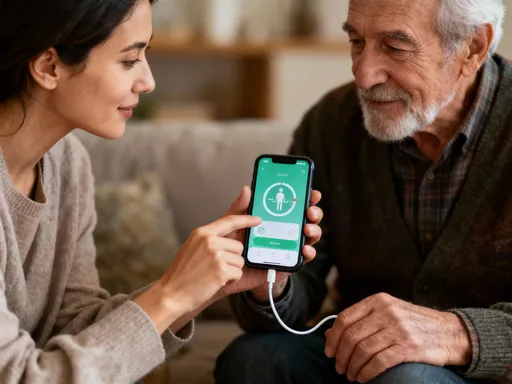
These small, intentional records are becoming bridges. My parents call more often now, asking to see updates. I send them a single photo or a 30-second clip—nothing fancy. But they light up. My mom said, ‘It feels like you’re right here.’ And my kids? They love watching themselves as babies. They giggle at their old voices, point at their tiny shoes. They feel seen. They know they’re remembered. And that’s powerful. It tells them: you matter. Your life is being noticed, not just documented.
Even my husband has started participating. He used to say, ‘Why are you always filming?’ Now he’ll hand me the phone and say, ‘Get this.’ He’s not doing it for Instagram. He’s doing it for us. That shift—from performance to presence, from collection to connection—is what’s really changed. Tech isn’t coming between us anymore. It’s helping us stay close, even when life gets loud and busy.
Building a Legacy Without the Pressure
Here’s what I’ve learned: a legacy isn’t about perfect albums or professional edits. It’s about love made visible. It’s about showing up, again and again, in small ways. I used to stress about missing moments, about not doing enough. Now I know: I don’t have to capture everything. I just have to honor what matters.
And you know what? My kids won’t remember every photo I took. They won’t care if the lighting was bad or if I was in the frame. But they will remember how it felt to be loved. They’ll remember the times I put the phone down and just hugged them. They’ll remember the videos I played that made us all laugh. They’ll remember that their voices were saved, their moments were seen, their lives were cherished.
That’s the real gift of tech—not the storage, not the features, but the chance to say, ‘I was here. I saw you. I loved you.’ We don’t need more tools. We need more intention. We don’t need to do it all. We just need to do what feels true. So let go of the pressure. Keep it simple. Save what moves you. And let the rest go. Because years from now, no one will scroll through your entire gallery. But someone will play that one voice note, tear up, and whisper, ‘I remember that.’ And that’s enough. That’s everything.