Stop saying ‘I don’t know what to order’ again: How nutrition apps changed our friend gatherings
Have you ever sat at a group dinner, scrolling through the menu with that familiar panic? Everyone’s waiting, but you’re stuck—worried about calories, allergens, or just wanting something healthy that actually tastes good. I used to dread these moments too—until we started using nutrition-matching apps together. Now, what felt stressful has become fun, fast, and surprisingly personal. These apps don’t just suggest food—they understand us. And honestly, our friend hangouts feel better than ever.
The Group Dinner Dilemma: When “I Don’t Know” Slows Everyone Down
Picture this: a cozy corner booth, laughter bubbling over, your favorite friends all around. The wine’s been poured, the appetizers are on their way, and then—silence. One person is still staring at the menu. You’ve been there, haven’t you? Maybe it’s you. I know I’ve been that person, frozen in decision paralysis, mentally calculating carbs, scanning for dairy, or wondering if the chef can leave out the nuts. And as the seconds tick by, the energy shifts. The jokes slow down. Someone sighs—just a little. You feel the pressure. It’s not just about food. It’s about not wanting to be the one who holds everyone back.
What makes this moment so tricky is that we all eat differently now. One friend is cutting back on sugar. Another is gluten-free for health reasons. Someone else is trying to eat more plant-based meals. And let’s be honest—no one wants to feel judged for ordering dessert or grilled salmon. We want to enjoy ourselves, but we also want to feel good the next day. So when we gather, that little gap between our choices can turn into a quiet tension. I remember one night at a tapas place, we spent twenty minutes just trying to figure out what dishes everyone could eat. By the time we ordered, the spark of the evening had dimmed a bit. We weren’t connecting—we were negotiating.
And it’s not just about dietary needs. Sometimes, it’s just the overwhelm. Too many options. Too little time. We want to make a choice that feels right, not just for our bodies, but for the mood of the night. But in that moment, with everyone watching, it’s hard to think clearly. The result? We default to safe, boring choices—or worse, we let someone else decide for us. But what if it didn’t have to be this way? What if technology could quietly help us bridge that gap, not by taking over, but by giving us back our confidence?
How One App Turned “I Can’t Eat That” Into “Let’s Try This Together”
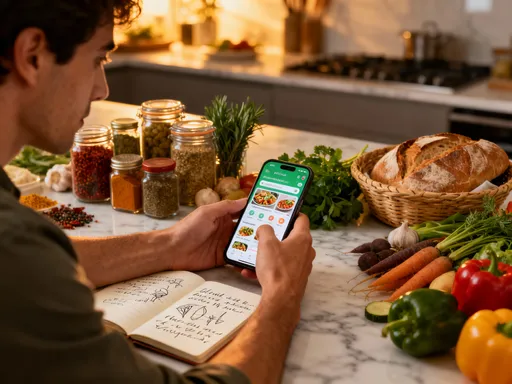
The shift started with a simple dinner at a new Thai spot downtown. One of us—let’s call her Lisa—has a dairy sensitivity and avoids refined sugar. Another, Maria, is focused on building strength and needs more protein. I was just trying to keep my energy steady. We all wanted something flavorful, but we were bracing for the usual round of “Can they make this without…?” and “Is there coconut milk in that?” Then I pulled out my phone and opened a nutrition-matching app I’d been testing. I tapped a few buttons, linked our profiles, and pointed the camera at the menu. Within seconds, the app highlighted three dishes that matched all of us—adjusted for allergies, goals, and taste preferences.
One was a turmeric-infused chicken curry with tofu on the side, light on coconut milk but rich in flavor. The app even suggested a tweak: ask for brown rice instead of white. We ordered it as a shared plate. And guess what? It was delicious. Not just “healthy good,” but genuinely crave-worthy. More than that—it became a conversation starter. “How did you know this would work for all of us?” Maria asked. “It’s like the app gets us,” Lisa said, laughing. That night, instead of feeling like we were compromising, we felt like we’d discovered something together. The app didn’t make the decision for us—it gave us the confidence to say yes.
Here’s how it works, in plain terms: you create a personal profile. You list any allergies, sensitivities, or health goals—like supporting digestion, boosting energy, or managing blood sugar. You can even add flavor preferences: “love spicy,” “avoid bitter greens,” “crave creamy textures.” When you’re at a restaurant, you open the app, scan the menu, and it instantly filters options based on your profile and the group’s combined needs. It doesn’t just say “this has 400 calories.” It says, “This dish supports your energy goals and can be adjusted to meet your friend’s needs.” It’s not rigid. It’s adaptive. And that’s what makes it feel human.
More Than Calories: How These Apps Understand Real-Life Needs
We’ve all seen calorie counters. They tell you what’s in your food, but not how it fits into your life. What’s different about these newer nutrition apps is that they don’t treat food like math. They treat it like a story—one that includes your body, your habits, and your emotions. For example, my friend Jenna was struggling with low iron. She knew she needed more red meat, but she didn’t want to order it every time. The app noticed her pattern—she often chose plant-based meals—and gently suggested dishes that combined lentils, spinach, and vitamin C-rich tomatoes to help her absorb iron better. It wasn’t a lecture. It was a nudge in the right direction.
Another friend, Diane, is managing her blood sugar. She loves Italian food, but pasta used to leave her feeling sluggish. The app didn’t tell her to avoid it. Instead, it suggested a dish with chickpea pasta, paired with a side of grilled vegetables and olive oil—balancing carbs with fiber and healthy fats. When she tried it, she felt satisfied and steady. “I didn’t feel deprived,” she said. “I felt smart.” That’s the difference. These apps aren’t about restriction. They’re about empowerment. They remember what you’ve liked before. They learn that you prefer lemon over vinegar, or that you skip fried foods when you’re feeling bloated. Over time, they start to feel less like tools and more like thoughtful companions.
And here’s the part that surprised me: they help us understand each other better. When we share our profiles—just the basics—we stop guessing. We don’t have to ask, “Can you eat nuts?” or “Are you still low-carb?” The app holds that information gently, so we can focus on the conversation. It creates a quiet kind of respect. We’re not policing each other’s plates. We’re simply making space for everyone to feel included. One night, the app suggested a Moroccan stew with apricots and chickpeas. No one had ordered it before, but it was perfect for three of us—gluten-free, high in fiber, and full of flavor. We all tried it. And now, it’s a running joke: “Let’s ask the app what adventure we’re having tonight.”
The Ripple Effect: Better Choices, Lighter Conversations
What started as a way to make ordering easier has quietly changed the tone of our gatherings. I’ve noticed something beautiful: we don’t comment on each other’s food anymore. No more “You’re so good for ordering the salad” or “I shouldn’t be eating this, but…” Those little remarks, meant as compliments or jokes, actually carried weight. They made us feel seen in ways we didn’t always want. Now, choices are neutral. No judgment. No praise. Just food—and friendship.
That shift has freed up so much mental space. Instead of analyzing what’s on our plates, we’re present with each other. We talk about our kids, our dreams, the book we’re reading, the walk we took this morning. The stress around food has faded, and in its place, there’s more room for laughter. I remember one dinner where we spent forty minutes talking about a podcast one of us loved. No one checked their phone. No one hesitated over dessert. We shared a dark chocolate avocado mousse the app had flagged as dairy-free and low sugar—delicious and kind to our bodies. And no one felt guilty. Because the app didn’t just help us choose it—it helped us feel okay with it.
There’s also been a subtle boost in confidence. We trust ourselves more. When the app suggests something, we feel supported, not controlled. It’s like having a quiet voice that says, “This will work. You’ll feel good.” And over time, that builds trust in our own instincts, too. We’re not outsourcing our decisions—we’re refining them. We still debate. We still say, “I’m in the mood for something crispy.” But now, we have data and care on our side. It’s not about being perfect. It’s about feeling good—physically and emotionally.
Planning Gatherings Made Easy: From “Where Should We Go?” to “There’s a Perfect Spot”
The magic doesn’t stop at the table. These apps have transformed how we plan our meetups, too. Remember the endless texts? “Where should we go?” “Somewhere with options.” “Somewhere not too loud.” Now, we use the app’s group planner feature. Before we decide, one of us enters the restaurant ideas, and the app scans them against our profiles. It shows which places have at least three suitable dishes per person, highlights any that offer gluten-free or dairy-free staples, and even checks for cozy seating or outdoor space.
Last month, it recommended a little Mediterranean place tucked away on a side street. None of us had heard of it. But the app said it had grain bowls with turmeric chicken, roasted vegetables, and tahini dressing—perfect for three of us—and a lentil stew that matched Diane’s needs. We went, and it was charming. The lighting was warm, the music was soft, and the food was fresh. We lingered over herbal tea and shared stories. That place is now one of our favorites. And it never would’ve made the list without the app.
What I love most is that it takes the friction out of planning. We’re not voting or compromising. We’re discovering. The app doesn’t pick for us—it shows us what’s possible. It’s like having a friend who knows all our quirks and says, “Hey, this place gets you.” And because we know we’ll all find something we love, we’re more excited to go. We’re not dreading the menu. We’re looking forward to the meal—and the moment.
A Little Tech, A Lot of Togetherness: Why This Feels So Right
I’ll be honest—I was skeptical at first. I worried that using an app would make our dinners feel cold, too calculated. But the opposite happened. The tech didn’t take over. It stepped back. It handled the logistics so we could focus on what matters: being together. We still talk. We still laugh. We still debate whether the soup should come before or after the main. But now, the hard part—navigating food with care—is already solved.
What’s beautiful is how it’s deepened our connection. We feel seen, not just as eaters, but as people with real, messy, wonderful lives. The app doesn’t judge. It adapts. And in doing so, it’s taught us to be a little more flexible, a little more kind—to ourselves and to each other. We’re not striving for perfect meals. We’re creating space for real moments. And that’s where the magic happens.
Technology often gets a bad rap for pulling us apart. But this? This brings us closer. It’s not about replacing human connection. It’s about removing the small barriers that get in the way. We’re still the ones sharing stories, holding hands, celebrating birthdays. The app is just the quiet helper that makes it all flow a little easier. And honestly, isn’t that what good tech should do? Not dazzle us, but support us—so we can be more present, more joyful, more ourselves.
Try It With Your Crew: How to Start Simple and Stay Together
If you’re curious, I’d say start small. You don’t have to convert your whole group overnight. Try it yourself first. Set up your profile. Play with the suggestions. See how it feels. Then, next time you’re out with a friend, say, “Hey, want to see what this app thinks we should order?” Share one suggestion. Make it light. Make it fun. No pressure. You might be surprised how open people are.
Or, bring it up before a group dinner. “I found this tool that helps me choose better—want to try it together?” Frame it as a way to make things easier, not a rule. And if someone isn’t interested, that’s okay. The goal isn’t uniformity. It’s inclusion. The app works best when it’s a shared resource, but even one person using it can shift the energy. I’ve seen it happen—someone says, “The app says this dish is high in iron and gluten-free,” and suddenly, three people want to try it.
Remember, this isn’t about tracking every bite or chasing perfection. It’s about feeling confident, included, and free to enjoy. The best moments around the table aren’t about what’s on our plates. They’re about the laughter, the tears, the “remember when…” stories, the silence that feels comfortable. And when we’re not stressed about food, we’re finally free to be present. So maybe, just maybe, a little app can help us reclaim the joy of gathering. Not by changing how we eat—but by helping us remember why we come together in the first place.