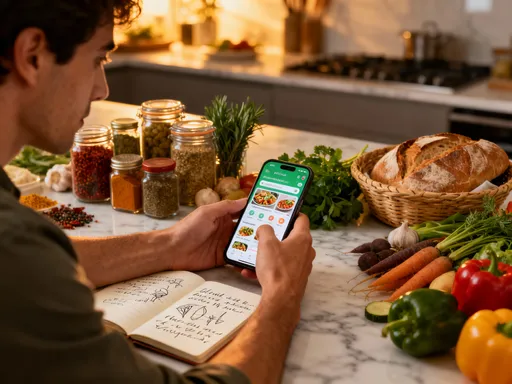
From Passive Screen Time to Meaningful Connection: How Personalized Learning Apps Transformed Our Family Dinners
Gone are the days when dinner was just a race to finish plates while scrolling through phones. Like many families, we used to sit together but feel miles apart—until we discovered a simple yet powerful shift. Now, our table buzzes with curiosity, laughter, and real conversation. It wasn’t a lifestyle overhaul, but a smart little app that knew what we loved. This is how personalized interest learning apps quietly turned our most ordinary moment into a daily adventure. I remember one night, my daughter looked up from her plate and said, ‘Did you know octopuses have three hearts?’ That question didn’t just surprise me—it opened a door. We spent the next twenty minutes talking about marine life, emotions, even how love might feel in different bodies. No phones were touched. No eyes drifted to screens. For the first time in years, we weren’t just sharing a meal—we were sharing wonder.
The Dinner Table That Lost Its Spark
Not so long ago, our family dinners felt more like parallel play than connection. We’d all be in the same room—plates filled, napkins unfolded—but our attention was scattered like crumbs across the table. My son would sneak glances at his phone under the table, my daughter would scroll through videos between bites, and I’d catch myself checking emails just to fill the silence. My husband, bless him, tried to start conversations, but they rarely lasted beyond “How was school?” and “Fine.” We were together, yes—but emotionally, we were on different islands.
I started to dread dinner. It wasn’t the cooking or the cleanup—it was the loneliness of being surrounded by the people I loved most and still feeling disconnected. I’d hear other moms talk about their “perfect” family meals with envy, but I knew we weren’t broken. We were just… distracted. The very devices that promised to bring us closer—smartphones, tablets, streaming—were quietly pulling us apart. I remember thinking, Is this really what family time has become? A silent coexistence? And then, one evening, my daughter asked me a question out of the blue: “Mom, why do we only talk about the weather at dinner?” That hit me like a soft punch to the heart. She noticed it too.
That moment made me wonder: what if technology—the very thing dividing us—could be the bridge back to each other? Not by removing screens entirely, but by using them differently. What if, instead of mindlessly consuming content, we could use apps that helped us learn, grow, and share—right at the table? It sounded almost too good to be true. But I decided to try. Not with rules or restrictions, but with curiosity. And that’s when everything changed.
Discovering the Right Kind of Screen: Apps That Feel Like Us
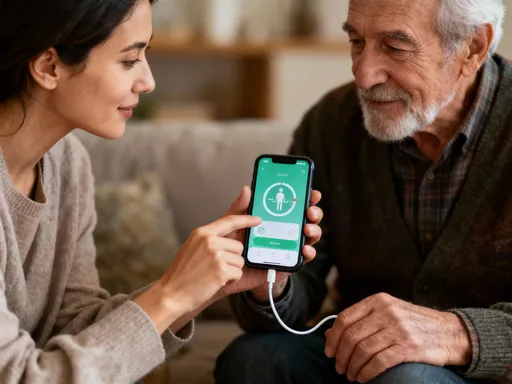
I didn’t set out to fix our family dynamics with an app. I just wanted something—anything—that could spark a real conversation. I started researching learning apps, not the ones that felt like digital worksheets, but the kind that felt alive. That’s when I found one that asked users to pick their interests right from the start. My son chose space and dinosaurs. My daughter picked ocean life and art. I selected baking and gardening. My husband, ever the history buff, went for ancient civilizations. The app didn’t judge. It just listened.
Within days, the app began sending each of us little daily discoveries—short videos, fun facts, interactive quizzes—tailored to what we cared about. My son got a 90-second clip on how black holes bend time. My daughter learned that clownfish can change gender. I discovered why sourdough starters bubble like magic. These weren’t long lessons or assignments. They were tiny sparks of joy, delivered at just the right moment—usually right before dinner.
What surprised me most was how personal it felt. It wasn’t just random content. The app remembered what we liked and built on it. When my daughter watched a video about coral reefs, the next day she got one about sea turtles. When my son asked a follow-up question about Mars, the app offered a simple simulation of a rover landing. It felt less like technology and more like a thoughtful friend who paid attention. And slowly, without any pressure, these little moments started spilling over into our meals. One night, my son said, “Guess what I learned today?” And just like that, dinner became interesting again.
Turning Curiosity into Conversation Starters
That first real conversation started with octopuses. My daughter, barely ten, looked up from her broccoli and said, “Did you know octopuses have three hearts? Two stop when they swim.” We all stopped eating. My husband asked, “Why would they need three hearts?” And off we went. We talked about how animals adapt, how blood works, even how feelings might travel through a body with multiple hearts. My son joked, “Maybe that’s why I feel things so much—I’ve got extra hearts too.” We laughed. We wondered. We stayed at the table long after the plates were empty.
That moment was a turning point. The app hadn’t replaced conversation—it had given us a language. Instead of “How was your day?” we now had real things to share. My son started telling us about gravitational waves. My daughter brought up how jellyfish don’t have brains but still move with purpose. I shared a trick I learned about using apple cider vinegar to revive wilted herbs. These weren’t lectures. They were invitations. Each fact became a doorway to deeper connection—about fears, dreams, even how we see the world.
What made it work was that no one felt put on the spot. The app did the heavy lifting of finding something interesting. All we had to do was share it. And because the topics came from our own interests, they felt authentic. My son wasn’t reciting something he was forced to learn—he was excited to talk about black holes because he genuinely cared. That authenticity made all the difference. We weren’t performing. We were discovering—together.
How Personalization Makes Learning Invisible—and Natural
The magic of these apps isn’t in the content—it’s in the timing and the fit. When learning feels relevant, it doesn’t feel like learning at all. It feels like living. My daughter doesn’t say, “I’m studying marine biology.” She says, “I’m learning cool stuff about octopuses.” That shift in language matters. It removes pressure. It turns knowledge into joy.
Because the app adapts to each of us, no one feels left out or overwhelmed. My son gets deeper dives into astrophysics when he’s ready, but the app knows when to pull back and offer something playful—like a quiz that turns planets into characters. My daughter gets gentle nudges to explore new sea creatures, but never so fast that she feels behind. The pacing is kind. The tone is warm. It’s like having a tutor who knows your personality, not just your grade level.
Over time, I noticed something beautiful: curiosity became contagious. My son started asking questions at the grocery store: “Why are some apples waxier than others?” My daughter pointed at the sky one evening and asked, “Is that Venus or a plane?” Even my husband, who once joked that he’d “learned enough in school,” began sharing historical tidbits about the town we live in. The app didn’t just change dinner—it changed how we move through the world. Learning stopped being something you do at a desk and started being something you carry with you, like a favorite pen or a well-worn recipe book.
Building a Ritual, Not Just a Routine
We didn’t plan to make this a tradition. It just happened. One night, I said, “Let’s each share one cool thing we learned today.” No rules. No grades. Just sharing. That small shift turned dinner from a daily task into something we looked forward to. Now, it’s not unusual for someone to say, “Wait—let me tell you something before we eat!” And we pause. We listen. We care.
The ritual grew naturally. Sometimes the “cool thing” comes from the app. Sometimes it’s something they noticed on a walk or heard from a friend. But the app lit the spark. It gave us permission to be curious, to wonder out loud, to not know and still feel proud of asking. I’ve seen my daughter’s confidence grow—not because she knows all the answers, but because she’s no longer afraid of questions.
What’s even more meaningful is how this habit has spread beyond the table. We now have “wonder moments” in the car, during laundry, even while folding socks. My son asked me last week, “Mom, why do leaves change color?” We didn’t have the answer, so we looked it up together. We didn’t just learn the science—we shared the search. That’s the real gift: not the facts themselves, but the act of seeking them side by side. It’s turning our family into a team of explorers, with no finish line in sight.
The Quiet Power of Tech That Knows You
What I didn’t expect was how emotional this would feel. These apps could have been cold, robotic, impersonal. But because they remember our interests, celebrate our progress, and speak to us in ways that feel familiar, they don’t. They feel like they see us. And when technology makes you feel seen, it changes how you show up in the world.
At dinner, that translated into deeper listening. We stopped waiting for our turn to talk and started truly hearing each other. When my daughter shares a fact about sea turtles, I don’t just nod—I ask follow-up questions. When my son explains why time slows near a black hole, I lean in, not because I have to, but because I want to. The app didn’t teach us how to listen. It gave us something worth listening to.
There’s a quiet intimacy in sharing what excites you and being met with interest instead of distraction. My husband once said, “I feel like I’m getting to know the kids all over again.” And I know exactly what he means. We’re not just sharing meals—we’re sharing minds. We’re building a culture of curiosity at home, where wonder is welcomed, questions are celebrated, and no topic is too small or too strange. That’s not something you can force. It grows when you give it the right conditions—like an app that knows what lights you up and helps you pass that light to others.
Making It Work for Your Family: Simple Steps to Start
You don’t need a tech overhaul to make this happen. You don’t even need the “perfect” app. Start small. Look for one that lets each family member choose their interests—no matter how random. Baking, bugs, ballet, space, snakes, sneakers—anything goes. Let the app surprise you. The goal isn’t to turn dinner into a classroom. It’s to make it a place where everyone feels interesting and interested.
Try this: for one week, make it a game. Each person shares one thing they learned that day—whether from the app or from life. Keep it light. Let the kids go first. Let them giggle when they say something silly. Let the conversation wander. If it leads to a debate about whether pineapple belongs on pizza, that’s fine. The point isn’t the topic—it’s the connection.
And don’t worry about consistency. Some nights, you’ll forget. Some nights, the phones will come out. That’s okay. What matters is the intention. Over time, you’ll notice something shift. You’ll catch yourself saving a fact to share at dinner. You’ll hear your child say, “Wait, you have to hear this!” You’ll realize that the table isn’t just where you eat—it’s where you grow.
Technology will always be part of our lives. The question isn’t whether to use it, but how. When we choose tools that reflect who we are and help us connect, they stop being distractions and start being bridges. They remind us that learning isn’t just for school—it’s for living. And when curiosity becomes a shared language, dinner stops being a duty and starts being a delight. It’s not about perfection. It’s about presence. And in a world that pulls us in a hundred directions, being truly present with the people we love? That’s the most powerful technology of all.